When Circularity Carries Contamination: The Hidden PFAS Challenge in Agriculture
Picture tonight’s dinner: a colourful salad, a slice of bread, maybe some grilled vegetables. Most of us assume that if food makes it to our plate, it’s been checked and is safe. But what if some of the most persistent pollutants on the planet are quietly travelling through our “green” systems and ending up in that same meal?
That’s the uncomfortable story behind so-called “forever chemicals” and modern agriculture. A recent paper by Islam and colleagues, published in Environmental Pollution, looks at how these chemicals move through farms that are trying to be more sustainable and circular. The findings matter not just for scientists, but for anyone who eats, farms, or works on sustainability solutions.
Sometimes, the same systems we celebrate for recycling and efficiency can also become quiet highways for pollution.
What Are “Forever Chemicals” and Why Should You Care?
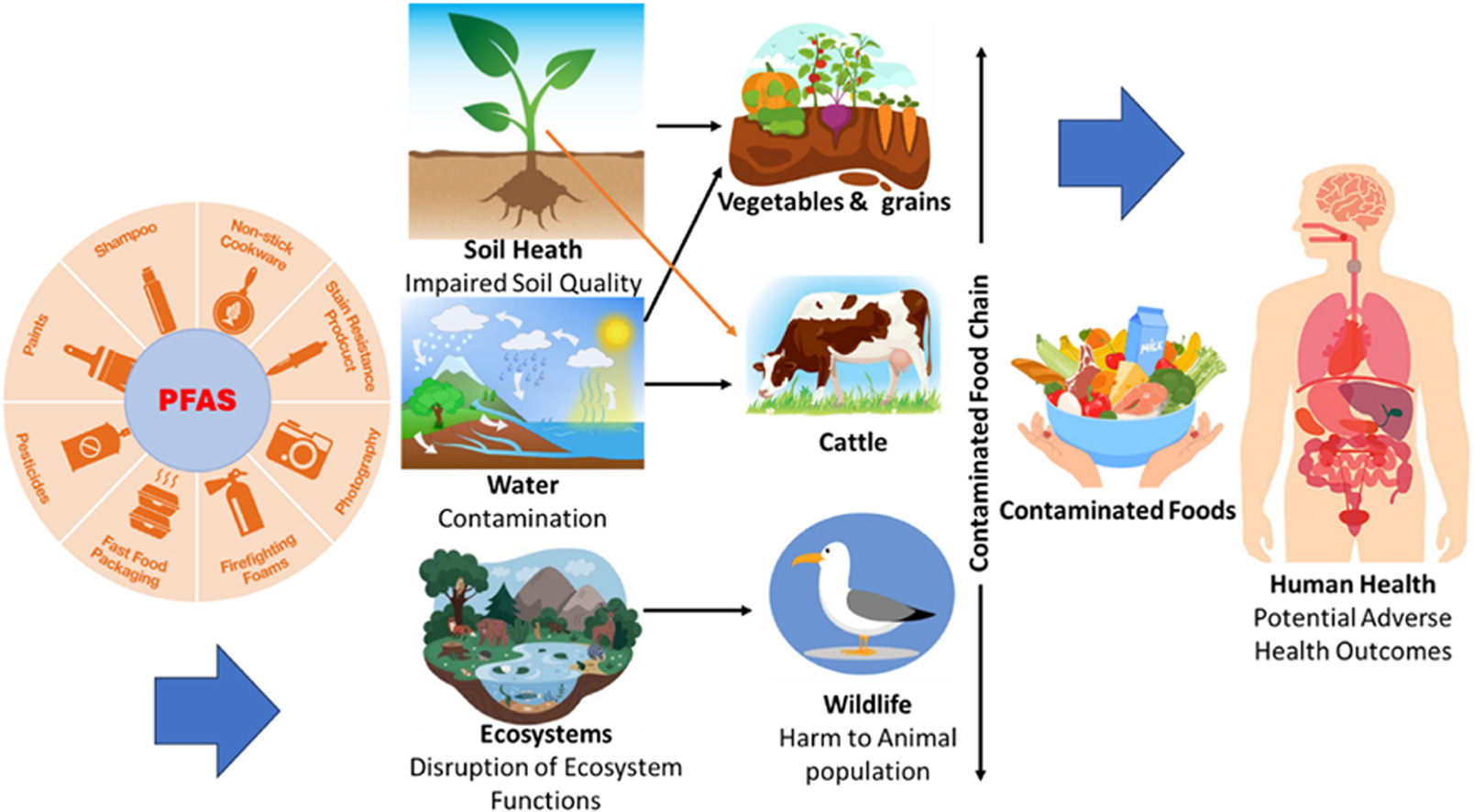
“Forever chemicals” is the everyday name for a large family of substances called per- and polyfluoroalkyl substances, or PFAS for short. They earned this nickname because, once they’re out in the environment, they hardly ever break down. Imagine a plastic bottle that never really crumbles away — now shrink that idea down to the scale of molecules that can move through water, soil, plants, animals, and people.
PFAS are everywhere. They help frying pans stay non-stick, raincoats stay waterproof, pizza boxes avoid greasy stains, and firefighting foams spread quickly. That convenience comes with a long-term cost: these chemicals stick around, travel far, and can build up in living things, including us.
PFAS in Plain English
In simple terms, PFAS are man-made chemicals engineered to repel oil and water. Chemists design them with very strong bonds between carbon and fluorine atoms. Those bonds are like industrial-strength super glue. They make PFAS incredibly useful in products, but also incredibly stubborn in nature.
Because PFAS don’t break down easily, they can move from one place to another over years or decades. A jacket made with PFAS today may send tiny amounts into washing water. That water goes to a treatment plant, then into sludge or effluent, then perhaps onto a field or into a river, and eventually into crops and wildlife. Think of PFAS as hitchhikers that never get off the road.
PFAS Journey: From Factory to Fork
Follow the path PFAS can take through a circular food system:
Factory → Product (non-stick pans, jackets, packaging) → Waste (household rubbish, dirty water) → Biosolids / Recycled Water from treatment plants → Farm Soil → Crops → Food → Human
This is the circular economy in action — resources are reused instead of thrown away. But PFAS can ride along the entire loop.
How the Circular Economy Lets PFAS Hitch a Ride
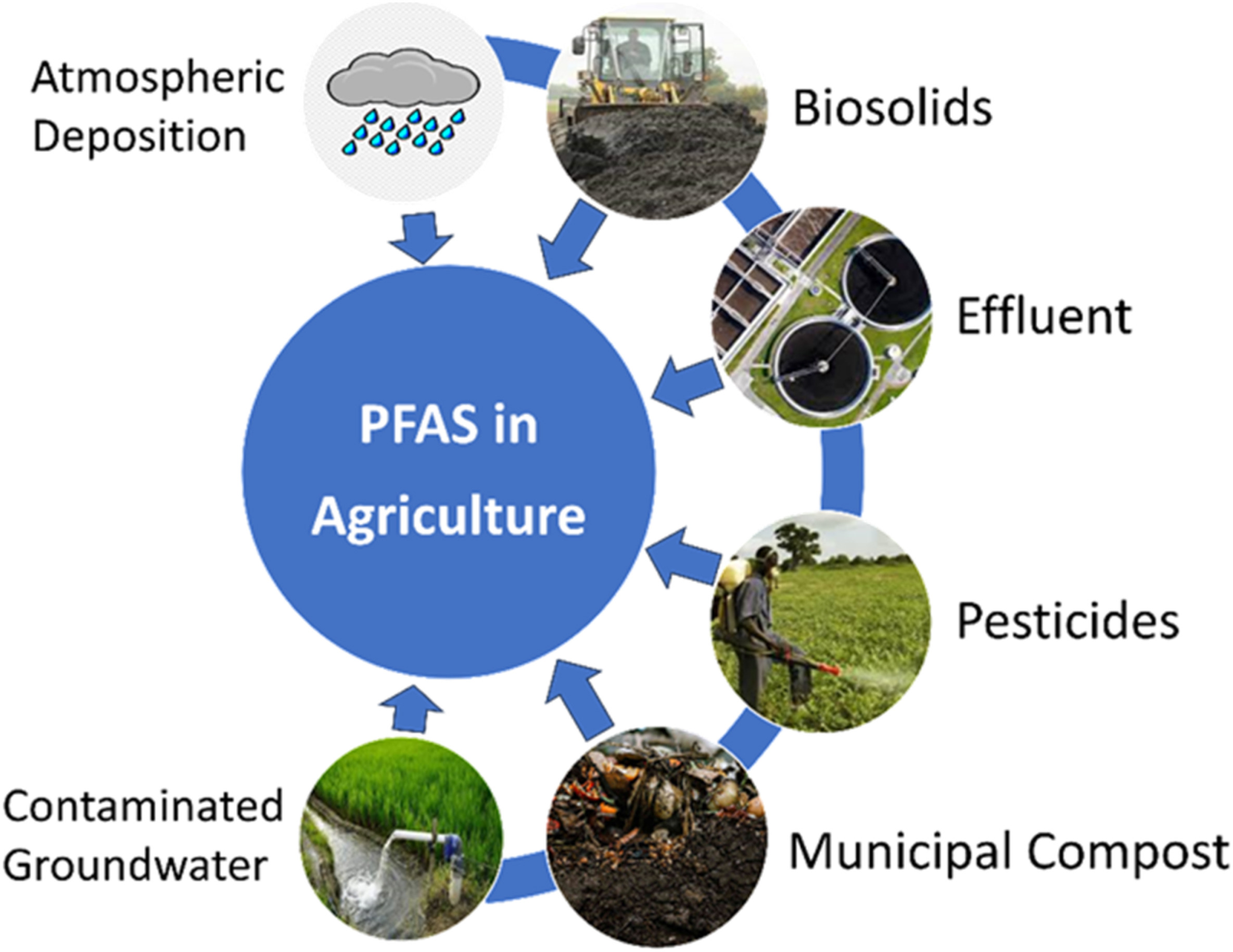
The circular economy is a powerful idea: instead of a “take, make, throw away” system, we try to keep materials in use for as long as possible. In agriculture, that often means recycling waste back onto the land. Sewage sludge (known as biosolids) becomes fertiliser, compost enriches soil, and treated wastewater is used for irrigation instead of being dumped.
On paper, this is brilliant. It saves nutrients, reduces landfill, and supports water security. But Islam and co-authors show that PFAS can sneak into each of these loops:
Biosolids are the solid materials left after sewage treatment. They’re rich in nitrogen and phosphorus, which plants love. They also collect PFAS washed off from homes, factories, and businesses. When biosolids are spread on fields, those “forever chemicals” are spread too.
Compost made from food scraps and green waste can also carry PFAS if packaging, coated papers, or other contaminated materials slip into the mix. Unlike a banana peel, PFAS won’t rot away in a compost pile.
Recycled water used for irrigation is typically safe from germs thanks to treatment, but standard treatment plants were never designed with PFAS in mind. These molecules can slip through filters and disinfectants. When that water is sprayed on fields, PFAS land on soil and crops, or seep into groundwater.
The very practices meant to make farming greener can, without careful design, carry invisible chemical passengers back to the farm.
Did You Know?
• Studies have found PFAS in the blood of the vast majority of people tested in countries like the United States.
• PFAS have been detected in wildlife as far away as the Arctic, showing how far they can travel.
• Scientists have identified thousands of different PFAS chemicals, and many are still poorly understood.
What Happens When Crops Absorb PFAS?
Once PFAS reach farm soil or irrigation water, plants can take them up through their roots. From there, some PFAS move into leaves, grains, fruits, and roots. Exactly how much gets in depends on the type of PFAS, the crop, and the soil conditions, but the key point is simple: the chemicals don’t just sit in the soil. They can move into the food we and our animals eat.
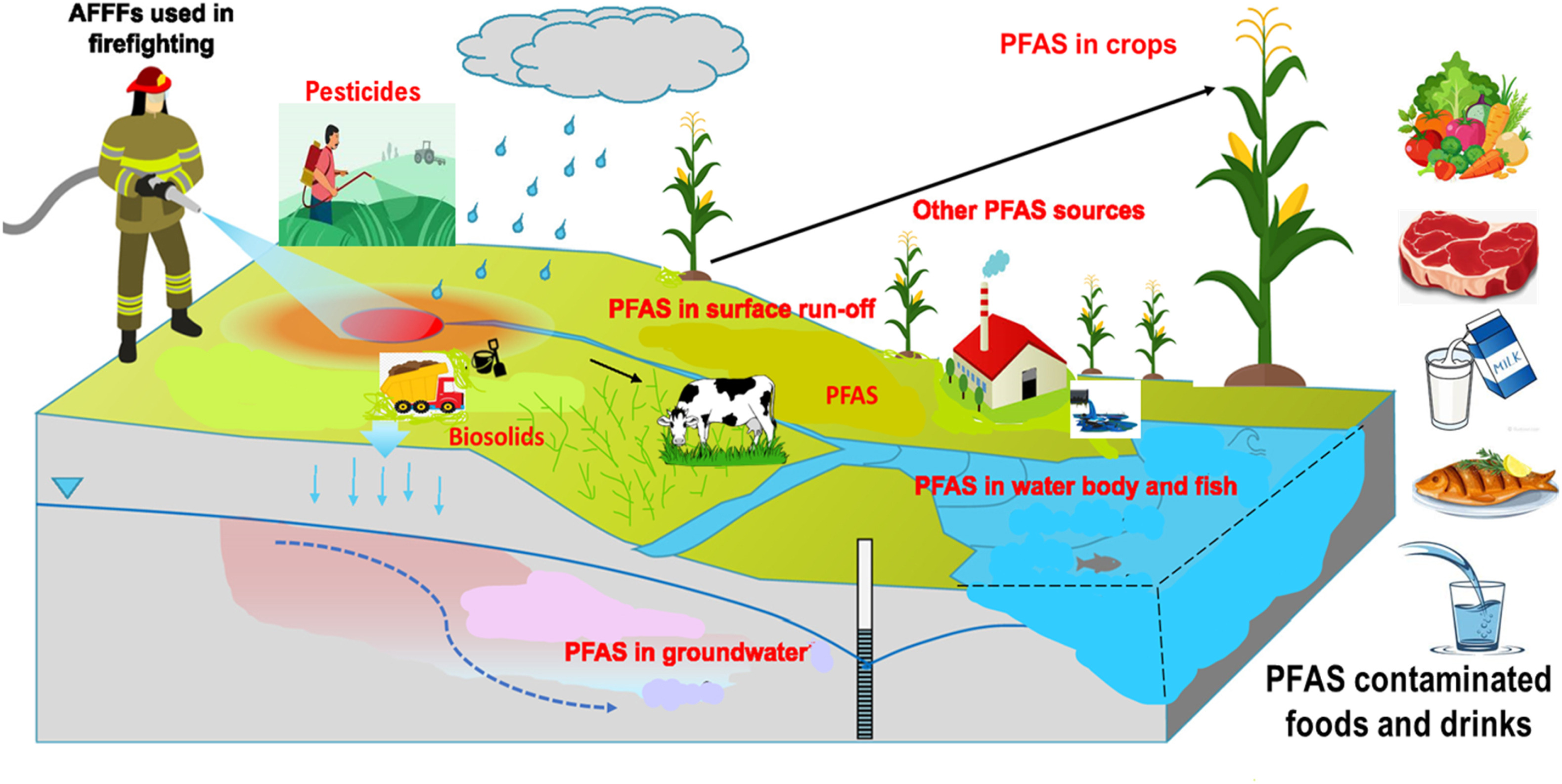
Islam and colleagues describe how this creates a chain: PFAS in soil → PFAS in crops → PFAS in livestock that eat those crops → PFAS in meat, milk, and eggs. Over time, small exposures can add up.
What does this mean for health? Research has linked certain PFAS to issues with the liver, thyroid hormone balance, immune function, and cholesterol, among other effects. The science is still evolving, and the goal is not to panic people, but to recognise that food is an important part of the picture.
For farmers, retailers, and consumers, the hardest part is that you can’t see PFAS, smell them, or taste them. Without monitoring and clear rules, they can remain a hidden layer beneath otherwise positive sustainability stories.
So What Can We Do About It?
The good news is that the problem is not unsolvable. The paper points toward several directions where action is already starting, and where organisations like Circularity Forge focus their work: combining research, practical sustainability solutions, and digital tools.
Smarter monitoring. You can’t manage what you don’t measure. Testing biosolids, compost, and recycled water for PFAS helps identify higher-risk streams and hotspots. Digital data platforms can make those results easier to interpret and share.
Better treatment. Advanced technologies such as activated carbon filters and specialised membranes can reduce PFAS in water, especially for drinking supplies. For agricultural reuse, pilots and targeted upgrades can lower PFAS where the risk is highest.
Stronger rules and standards. Governments are starting to set limits for PFAS in drinking water, biosolids, and other materials. Aligning waste, water, and agricultural policies helps ensure that solving a problem in one place doesn’t simply shift it somewhere else.
Rethinking products at the source. The most powerful lever is to use fewer PFAS in the first place. That means designing products that don’t rely on “forever” chemistry, changing procurement policies, and holding manufacturers responsible for safer alternatives.
What You Can Do, Personally
What You Can Do
1. Choose simpler products where you can. When possible, pick cookware, clothing, and packaging that don’t advertise “stain-resistant” or “non-stick” coatings, which may rely on PFAS.
2. Support PFAS-free policies. Back local and national efforts to regulate PFAS and to phase them out of unnecessary uses, especially in food contact materials.
3. Ask questions about reuse projects. If your community is planning new composting or water reuse schemes, encourage transparent testing and communication about chemical safety, not just nutrients and germs.
4. Stay curious and share reliable information. Following science-based updates and sharing them with colleagues, clients, or neighbours helps build a culture of informed decision-making.
Looking Ahead: Making Circularity Safer
The core message from Islam and co-authors is not that circular agriculture is a bad idea. Quite the opposite: we need circular systems to use water, nutrients, and materials more wisely. But we also need to design those systems with chemistry in mind, so we’re not endlessly recycling pollution along with resources.
This is where an integrated approach matters. Research helps us understand where PFAS are and how they move. Sustainability practitioners can redesign waste, water, and farming practices. Digital tools can turn complex data into clear, practical guidance for decision-makers. Together, these pieces make it possible to keep the benefits of circularity while steadily shrinking the PFAS footprint.
Forever chemicals don’t have to mean forever problems — if we pay attention, act early, and design smarter systems.
At Circularity Forge, we see conversations like this as part of a broader shift: using science-informed insight to power real-world sustainability and digital innovation. As awareness of PFAS grows, so does the opportunity to build food systems that are not only circular, but genuinely clean and trustworthy.
Citation
Islam, M.A., Parvin, M.I., Nguyen, C., Alam, M.R., Kwong, P., Zhou, J.L., Hessel, V., & Ahmed, M.B. (2025). Per- and polyfluoroalkyl substances (PFAS) contamination in agriculture and its potential conflict with circular economy. Environmental Pollution, 385, 127036.
 Circularity Forge
Leave a comment